
ALWAYS TIRED?
It might not be your schedule. It might be your strength.
It Might Not Be Your Schedule — It Might Be Your Strength
If you’re reading this while running on your third coffee and pure willpower, you’re not alone.
Life is full. Work. Kids. Commutes. Responsibilities. The mental load. It all adds up.
But here’s the part most people miss: feeling constantly low on energy, stiff, and run down isn’t always just because you’re busy.
A huge piece that often gets overlooked is this:
Your body’s capacity.
Busy isn’t the problem — low capacity is
When you’re not training consistently, your body slowly loses the ability to handle the demands you throw at it.
Not in a dramatic “everything falls apart overnight” way.
More like a gradual slide where normal life starts to feel heavier than it should.
That’s when you start noticing things like:
Energy dips throughout the day
More aches and tightness (especially back, hips, shoulders)
Feeling flat even after a full night’s sleep
Getting sore from basic stuff (gardening, carrying groceries, playing with the kids)
It’s not that you’re doing life “wrong.”
It’s that your body isn’t being trained for the job it’s doing.
The goal isn’t to do more — it’s to handle more
Most people respond to tiredness by trying to add things:
More supplements
More caffeine
More cardio
More “push through it”
But the answer is often the opposite.
The goal isn’t to do more. It’s to build a body that can handle more.
That’s what strength training does.
How strength training helps when you feel tired all the time
Strength training isn’t just about muscle or aesthetics. It’s about making everyday life feel easier.
Here’s what consistent strength training supports:
Improved energy: when your muscles and joints work better, everything costs less effort
Fewer aches and pains: stronger tissues + better movement = less cranky joints
Better recovery: you bounce back faster from stress, training, and life
More capability: lifting, carrying, climbing, getting up off the floor, keeping up with your kids
In other words: you’re not just training for workouts.
You’re training for life.
You don’t need to be extreme
This is the good news.
You don’t need hours in the gym. You don’t need to smash yourself. You don’t need to overhaul your entire life on Monday.
You need:
A plan (so you’re not guessing)
Consistency (so your body adapts)
Support (so you actually stick with it)
Even 2–3 sessions per week can make a noticeable difference in how you feel.
Train for your life
If you’ve been telling yourself “I’m just tired because I’m busy,” consider this reframe:
Maybe you’re tired because your body hasn’t been trained for the load you’re carrying.
Strength training helps you build capacity so you can show up with more energy, less stiffness, and more confidence in what your body can do.
If you needed a reminder today, let it be this:
Train for your life, not just for workouts.
When you’re ready, start small — then stay consistent.
HOW HARD SHOULD YOU TRAIN?
Are you going too hard or not hard enough?
One of the biggest questions in training is also one of the most misunderstood: how hard should you actually be working?
Some people do not push hard enough to create real change. Others push too hard, too often, and end up sore, flat, or inconsistent. The sweet spot sits somewhere in the middle.
That is one of the reasons we use a structured 10-week training program at ABT. Rather than leaving people guessing, the program is designed to guide your effort across the block so you are working hard enough to get results, without going so hard that you burn out or lose consistency.
The problem with training too easy
If you finish every set feeling like you barely did anything, your body has very little reason to adapt. To build strength, improve fitness, or grow muscle, training needs to be challenging enough to send a clear signal.
That does not mean every session needs to feel brutal. It does mean there should be real effort involved.
The problem with training too hard
On the other side, going to all-out failure all the time is not the answer either. If every session leaves you completely wrecked, it becomes much harder to recover, maintain good technique, and train consistently across the week.
Training too hard, too often can also make it difficult to progress because you are always digging a hole instead of building momentum.
The sweet spot: 1–3 reps left in the tank
For most strength and muscle-building work, a good target is to finish your sets with around 1–3 reps in reserve, often called RIR.
That means the set feels hard, but you are still in control. You could maybe do one, two, or three more reps if you absolutely had to, but not many more.
This is often where the best balance happens:
enough effort to drive progress
enough control to keep technique solid
enough energy left to recover and train again
How our 10-week program helps
A big part of good programming is knowing when to push, when to build, and when to test progress.
Our 10-week training program is designed to take members through that process in a structured way. Early in the block, the focus is on technique, movement quality, and learning the lifts with control. As the weeks go on, the reps gradually come down and the intensity gradually increases.
That means you are not expected to guess how hard to train every session. The program helps guide that for you.
Across the block, members learn how to:
train with purpose
match effort to the goal of the session
build confidence with heavier loads over time
work hard enough to create progress
stay consistent without overdoing it
By the time testing week comes around, you are in a much better position to see what you are capable of because the work has been built properly across the previous weeks.
What this should feel like
Training with 1–3 reps left in the tank usually feels like:
the last few reps are challenging
you need to focus and work
your technique is still solid
you are not rushing or losing control
you finish knowing you worked hard, but not destroyed
If you are stopping with five or six reps still left, you may not be pushing enough. If every set turns into a grind with poor form, you are probably pushing too far.
Why this matters for results
The goal of training is not to win one workout. It is to create progress you can repeat week after week.
When you train at the right intensity, you give your body a reason to adapt while still being able to recover and come back again. That is what helps you:
build strength
grow muscle
improve confidence with heavier loads
stay consistent over time
Consistency is where the real results come from.
A smarter way to think about hard training
Hard training is not about crawling out of the gym after every session. It is about using the right amount of effort for the goal of the day.
Some days will feel lighter and more technical. Some days will feel heavier and more demanding. Both have value. What matters is that your effort matches the purpose of the session.
That is exactly what good programming is for. It gives your effort direction.
Final thought
If you want better results, ask yourself: am I really pushing enough to create change, or am I pushing so hard that I cannot sustain it?
The answer for most people is not at either extreme.
Push yourself, but train with purpose. Work hard, stay in control, and trust the process. Our 10-week program is designed to help you do exactly that.
WHY THE SCALE ISN’T MOVING
But you are
If the scale hasn’t moved lately but you’ve been training consistently, eating better, and feeling stronger, it can be incredibly frustrating to feel like nothing is happening.
But the truth is, body weight is only one data point. It does not tell the full story of what is happening inside your body.
The scale only measures total body weight
When you step on the scale, it gives you one number: your total mass. It does not tell you how much of that is muscle, body fat, water, food in your system, or normal day-to-day fluctuations.
That matters because body composition can change even when body weight stays the same.
For example, if you are gaining muscle while losing body fat, the scale may barely move, even though your body is changing in a meaningful way. Your clothes may fit differently, your strength may improve, and your energy may feel better, all without a dramatic drop in body weight.
Why body weight can stay the same
There are a few common reasons the scale may not change much, even when progress is happening.
You may be building muscle
If you are doing regular strength training, your body can increase lean muscle mass over time. Muscle is denser than fat, so changes in body composition may not show up clearly on the scale.
This is especially common in people who are new to training, returning after a break, or following a well-structured program consistently.
You may be holding more water
Water retention can affect scale weight more than most people realise. Training creates stress and inflammation in the muscles as part of the adaptation process, and that can temporarily increase water retention.
Other things can influence this too, including:
higher carbohydrate intake
salt intake
poor sleep
stress
menstrual cycle changes
soreness from training
This does not mean progress has stopped. It often means your body is responding normally.
Your body is adapting to training
When you begin a new training block or increase training intensity, your body goes through a period of adjustment. During that time, performance, recovery, hydration, and muscle repair can all influence scale weight.
In other words, the scale may reflect short-term noise rather than long-term progress.
What the science tells us
Research consistently shows that improvements in body composition, strength, fitness, and health markers do not always happen in a straight line or show up clearly through body weight alone.
Strength training helps preserve and build lean muscle mass, which is important for metabolism, physical function, bone health, and long-term health as we age. Aerobic exercise improves cardiovascular fitness, energy systems, and overall health. Together, they can improve how your body functions even before large changes in scale weight appear.
Body weight can also fluctuate from day to day by one to three kilograms depending on hydration, food intake, glycogen storage, hormones, and digestion. That means a single weigh-in tells you very little on its own.
What matters more is the trend over time, and even then, that trend should be considered alongside other markers of progress.
Better ways to measure progress
If you only use the scale, you miss a lot of useful information. A better approach is to look at multiple indicators.
These might include:
strength improvements
body fat percentage
lean muscle mass
progress photos
how your clothes fit
energy levels
recovery
training consistency
confidence in the gym
Sometimes the biggest signs of progress are not visual at first. You may be lifting more, recovering faster, moving better, or feeling more capable in everyday life.
Why we use InBody scans at ABT
At ABT, we use InBody scans to help members see a clearer picture of what is actually changing.
Rather than relying on scale weight alone, InBody can help track:
muscle mass
body fat percentage
overall body composition trends over time
That gives you more context and helps reduce the frustration that comes from focusing on one number.
It also helps us have better conversations about what progress really looks like. Sometimes the scale is flat, but muscle mass is up and body fat is down. That is progress. Sometimes body weight is up slightly, but training performance and recovery have improved. That matters too.
Zoom out and look at the full picture
If the scale has not moved, it does not automatically mean you are stuck.
Ask yourself:
Am I getting stronger?
Am I training more consistently?
Is my energy improving?
Am I recovering better?
Do I feel more confident in my body?
Are my habits better than they were a month ago?
These are all signs that change is happening.
Final thought
The scale is not useless, but it is incomplete. If you let it be the only measure of success, you risk missing the progress that matters most.
Real progress is often quieter than people expect. It shows up in strength, confidence, energy, consistency, and body composition changes that take time.
So before you feel discouraged, zoom out. Look at the full picture.
Because even if the scale is not moving, you still might be.
WHAT GREAT COACHING REALLY MEANS
Coaching is a partnership
Most people think coaching is just someone counting reps, fixing your form, and yelling “one more!”
Sure — good coaching includes technique. But if that’s all it is, you’re missing the point.
Great coaching is what makes training feel safe, doable, and worth coming back to. It’s the difference between “I went to the gym” and “I’m actually getting better.”
Coaching is more than cues
Correcting technique matters. It keeps you moving well, helps you get stronger, and reduces the chance of getting hurt.
But great coaching goes beyond the obvious.
It’s knowing you — your goals, your training history, your schedule, your stress levels, and the little things that affect how you show up on any given day.
It’s understanding that progress isn’t just physical. Confidence is built the same way strength is: one good rep at a time.
Great coaching doesn’t have to be loud
There’s a myth that good coaches have to be intense.
In reality, the best coaching often looks like this:
Listening closely
Observing carefully
Giving one simple cue that changes everything
Knowing when to push, and when to pull back
Sometimes the most powerful thing a coach can say is, “Let’s adjust that today.”
Curiosity is a coaching superpower
We don’t pretend to know it all. The fitness industry loves certainty — but real coaching requires curiosity.
Great coaches stay curious. We ask questions. We keep learning. We look for the best answer for your body, not a one-size-fits-all rule.
That might mean:
Finding the right regression so you can train pain-free
Changing a movement to suit an old injury
Tweaking your load or tempo so you build confidence and control
Helping you understand why we’re doing what we’re doing
Coaching is a partnership
A coach can’t do the work for you — and you don’t need them to.
Your job is to show up, be honest about where you’re at, and put in the effort.
Our job is to guide you, encourage you, and support you with a plan that makes sense — so every session moves you forward.
Progress happens when both sides do their part.
It’s not just reps and sets — it’s connection
At the end of the day, coaching is about connection.
It’s about being seen. Being supported. Being coached like a human, not a number.
Because your goals matter.
And so do you.
Come train with coaches who care
If you’re looking for a place where coaches listen, stay curious, and genuinely want you to succeed — you’ll fit right in.
Come train with us and experience what great coaching really means.
NEW, EXPANDED TIMETABLE
More opportunities to get STRONG!
From Monday 2 February, we’re thrilled to roll out an expanded timetable with 8 additional classes each week.
That means more chances to train, more flexibility around work and family… and fewer “I just couldn’t make it” moments.
What’s new this week
1) New 7:15am classes on Strength days
We’ve added 7:15am sessions on our Strength days to give you another morning option — perfect if 6:15am is a squeeze, or if you like to get the workout done before the day gets away from you.
2) New 30-minute lunchtime Strength classes
We’re also introducing lunchtime Strength classes that are only 30 minutes.
Think of them as an express version of our 45-minute sessions — the same smart coaching and strength focus, just tighter and punchier.
They’re ideal for:
WFH lunch breaks
Busy schedules
Anyone who wants a quick in-and-out session without sacrificing quality
ThE NEW timetable
Monday (💪 Strength)
5:15am
6:15am
7:15am
9:15am
12:00pm
12:30pm
5:00pm
6:00pm
Tuesday (💪 Strength)
5:15am
6:15am
7:15am
9:15am
5:00pm
6:00pm
Wednesday (❤️ Conditioning)
5:15am
6:15am
9:15am
5:00pm
6:00pm
Thursday (💪 Strength)
5:15am
6:15am
7:15am
9:15am
5:00pm
6:00pm
Friday (💪 Strength)
5:15am
6:15am
7:15am
9:15am
12:00pm
12:30pm
Saturday (💪❤️ hybrid = Strength + Conditioning)
7:00am
8:00am
Ready to lock in your sessions?
Jump into the timetable and book your week ahead.
If you’re not sure which sessions suit your goals (or your schedule), chat to a coach — we’ll help you build a routine you can actually stick to.
THE BAD NEWS… AND THE GOOD NEWS
Your fitness journey has both
If there's one thing we all learn on the fitness journey, it's this: there's always a "bad news" and a "good news." And most of the time, they're two sides of the same coin.
The reality of building strength isn't always pretty or motivating. But it's always worth it. Here's what we mean.
No One Can Train For You
The bad news: No one can do the work for you. Not your coach, not your training partner, not even the most expensive program in the world. You have to show up. You have to lift the weight. You have to put in the effort.
The good news: Every single result you earn is yours to keep. No one can take away the strength you build, the habits you form, or the confidence you gain. It's all yours.
Motivation is Unreliable
The bad news: Motivation fades. It's exciting at first—you're pumped, you're ready, you're all in. Then life happens. Work gets busy. The weather turns cold. The alarm goes off at 5:45am and suddenly that motivation is nowhere to be found.
The good news: Habits step in when motivation taps out. When you build a routine, when training becomes part of your week like brushing your teeth or making coffee, you don't need to feel motivated. You just go. And that's when real transformation begins.
Progress Feels Painfully Slow
The bad news: Progress feels slow, boring, even invisible at times. You won't see dramatic changes overnight. Some weeks you'll feel like nothing is happening. You'll wonder if it's even working.
The good news: It's still happening—quietly, consistently, day by day. Your body is adapting. Your muscles are getting stronger. Your endurance is building. You might not see it in the mirror yet, but it's there. Trust the process.
Workouts Won't Always Feel Fun
The bad news: Workouts won't always feel fun. Some days you'll be tired. Some sessions will feel hard. Some exercises will frustrate you. There will be moments when you'd rather be literally anywhere else.
The good news: Feeling stronger, healthier, and more confident always does feel good. That moment when you lift a weight that used to feel impossible? That feeling when you realize you're not out of breath climbing stairs anymore? That confidence when you catch your reflection and think, "I look strong"? That's the payoff.
You Won't Always Feel Like Showing Up
The bad news: You won't always feel like showing up. There will be days when your bed feels more appealing than the gym. Days when you're tired, stressed, or just not in the mood.
The good news: Showing up anyway is where real change happens. The people who transform their lives aren't the ones who only train when they feel like it. They're the ones who train especially when they don't feel like it. That's the difference.
Here's The Real Truth
Time will pass whether you train or not.
Six months from now, you'll be six months older. That's happening regardless. The only question is: what will you have built in that time?
Your body will adapt to something. It will either adapt to the effort you put in—getting stronger, fitter, more capable—or it will adapt to the comfort you choose instead, becoming weaker, stiffer, less resilient.
So choose the path that builds you.
Choose the habits that support you. Choose the community that lifts you up. Choose the future you'll be proud to live in.
Strong Isn't Luck
Strong isn't something you're born with. It's not gifted to a lucky few. It's not genetics or good fortune.
Strong is built.
Rep by rep. Choice by choice. Day by day.
It's built in the 6:15am class when you'd rather sleep in. It's built in the decision to come back after a break. It's built in the moment you choose the barbell over the couch.
It's built by ordinary people making consistent choices over time.
And here's what we know from years of coaching: if you're willing to show up, we'll help you build it.
The Choice is Yours
At Altona Bay Training, we see both sides of the coin every day.
We see the hard days—the ones where members walk in tired, unmotivated, unsure. And we see what happens when they choose to show up anyway.
We see the slow progress—the weeks where nothing seems to change. And we see the moment it all clicks, when members realize they've become someone completely different.
We see the doubt—"Can I really do this?" And we see the proof—"I just did something I never thought possible."
The bad news is it won't always be easy.
The good news is you don't have to do it alone.
Our coaches are here to guide you. Our community is here to support you. Our structured programs are here to show you exactly what to do.
All you have to do is show up.
Start Building Your Strong
If you've been waiting for the perfect time, the perfect plan, or the perfect feeling—stop waiting.
Time is passing. Your body is adapting. The only question is: to what?
Choose strength. Choose consistency. Choose yourself.
WHY NEW YEAR’S RESOLUTIONS FAIL
and what to do instead in 2026.
And What to Do Instead in 2026
It's that time of year again. The time when everyone starts thinking about New Year's resolutions: "This is the year I'll finally get fit." "I'll lose 10 kilos." "I'll train five days a week, no excuses."
These intentions come from a good place—a genuine desire to improve. But here's the uncomfortable truth: about 80% of New Year's resolutions fail by February.
If you've been caught in this cycle before, you're not alone. And it's not because you lack willpower or discipline. It's because resolutions themselves are fundamentally flawed.
The good news? There's a better way to approach 2026—one that actually works.
Why Most Resolutions Are Doomed From the Start
1. They're Based on All-or-Nothing Thinking
Most resolutions demand perfection. "I'll train five days a week." "I'll cut out all sugar." "I'll meal prep every Sunday."
These goals sound admirable, but they leave zero room for error. Miss one workout because you're genuinely exhausted? Eat dessert at a friend's birthday? Suddenly you feel like you've failed, and the whole resolution crumbles.
When we view progress in binaries—success or failure—a single setback can derail everything. This rigid thinking leads to burnout, guilt, and eventually giving up entirely.
Real life isn't perfect, and your goals shouldn't demand perfection either.
2. They're Vague or Unrealistic
"I want to get healthier." "I'll get in shape." "I'll be more consistent."
What does any of that actually mean? Without specific, actionable steps, these resolutions are impossible to follow through on.
Vague goals give you nothing to measure, no clear path forward, and no way to know if you're making progress. And unrealistic goals—like going from zero training to six days a week overnight—set you up to fail before you even start.
3. They're Driven by External Pressure, Not Genuine Desire
Many resolutions are influenced by what we think we should do, not what we actually want to do.
Maybe you're trying to achieve a certain body type because of social media standards. Maybe you're joining a gym because everyone else is. Maybe you're chasing a goal that looks good on paper but doesn't actually align with your values or lifestyle.
When goals come from external pressure rather than intrinsic motivation, they're far less likely to stick. You need to want it for yourself, not for Instagram or because it's January 1st.
4. There's No System or Structure
A resolution without a plan is just a wish.
Saying "I want to eat healthier" means nothing without a clear system: stocking nutritious groceries, carving out time to cook, learning simple recipes, and building the habit into your routine.
Habits require structured cues, environmental changes, and consistent repetition. Without that foundation, even the best intentions fall apart.
A Better Way to Approach 2026
Forget resolutions. Instead, focus on building sustainable habits and realistic goals that actually fit your life. Here's how.
1. Start Small, Think Big
Instead of swinging for the fences on January 1st, start with something ridiculously manageable.
Want to train more? Commit to two sessions a week, not five. Want to eat better? Add one vegetable to dinner, not a complete diet overhaul.
Small wins build momentum and confidence. They prove to yourself that you can do this, which makes long-term consistency achievable.
Progress compounds. Start small, stay consistent, and watch it add up.
2. Make Your Goals Specific and Measurable
Vague goals lead to vague results. Get specific.
Instead of "get healthier," try:
"Train at ABT twice a week on Tuesdays and Thursdays at 6:15am"
"Walk 8,000 steps a day, five days a week"
"Drink 2 litres of water daily"
These goals are clear, measurable, and achievable. You'll know exactly what success looks like, and you can track your progress along the way.
3. Align Your Goals With Your Values
Ask yourself: Why does this goal actually matter to me?
Not "I should lose weight because society says so," but "I want to feel strong and energized so I can keep up with my kids and enjoy life without feeling exhausted."
Not "I need to look a certain way," but "I want to build strength and confidence so I feel capable and proud of what my body can do."
When your goals are rooted in your own values—not external expectations—you're far more likely to stay committed.
4. Build a System, Not Just a Goal
Goals are the destination. Systems are how you get there.
If your goal is to train consistently, your system might include:
Booking classes in advance so they're locked in your calendar
Packing your gym bag the night before
Finding a training buddy for accountability
Choosing a gym close to home or work so it's convenient
At Altona Bay Training, we've built the system for you: structured programs, attentive coaches, a supportive community, and 25 classes a week across 6 days so you can find times that fit your life.
You just need to show up. We'll handle the rest.
5. Track Progress, Not Perfection
Perfection isn't the goal. Progress is.
Keep a simple log of your training sessions. Celebrate the weeks you hit your target. Notice when you feel stronger, sleep better, or have more energy.
Focus on the trend, not individual days. One missed workout doesn't erase your progress. What matters is that you're moving forward more often than not.
6. Be Flexible and Kind to Yourself
Life happens. You'll get sick. Work will get busy. You'll have weeks where training falls off the radar.
That's okay. That's normal.
The key is to adapt, not abandon. Miss a week? Don't spiral into guilt or give up entirely. Just get back to it. Adjust your plan if needed. Progress isn't linear, and that's fine.
The people who succeed aren't the ones who never stumble. They're the ones who keep going anyway.
7. Find Support and Community
Surrounding yourself with people who encourage your goals makes a massive difference.
This is one of the biggest advantages of training at a gym like Altona Bay Training. You're not doing it alone. You've got coaches who guide you, correct your form, and push you when you need it. You've got training mates who show up alongside you, celebrate your wins, and keep you accountable.
Community turns isolated effort into shared momentum. And that makes all the difference.
What Real Change Looks Like
Real, lasting change doesn't happen because the calendar flips to January 1st. It happens when you:
Choose goals that align with your values, not society's expectations
Start small and build momentum gradually
Create systems that support your habits
Track progress, not perfection
Stay flexible and compassionate with yourself
Surround yourself with people who lift you up
It's not flashy. It's not dramatic. But it works.
Your 2026 Game Plan
So here's what we suggest instead of a New Year's resolution:
Pick one or two specific, achievable goals that genuinely matter to you. Not ten. Not a complete life overhaul. Just one or two things you can realistically commit to.
Build a system around them. What needs to happen for you to succeed? What obstacles might get in your way, and how can you plan for them?
Start now—or start in February. You don't need to wait for January 1st. You also don't need to start when everyone else does. Start when you're ready, and start small.
Find your people. Whether that's joining Altona Bay Training, finding a workout buddy, or simply telling a friend about your goals, don't do it alone.
Give yourself permission to be imperfect. You'll have setbacks. You'll have off weeks. That's part of the process. What matters is that you keep going.
Let's Make 2026 Different
This year, skip the resolution. Skip the all-or-nothing thinking. Skip the guilt and pressure and unrealistic expectations.
Instead, choose one or two meaningful goals. Build a system that supports them. Start small. Stay consistent. Be kind to yourself.
And if you need help—if you want structure, guidance, community, and a proven system that actually works—we're here.
At Altona Bay Training, we help people just like you build sustainable strength and lasting habits. No perfection required. No judgment. Just smart, structured training and a community that's got your back.
DON’T PRESS PAUSE ON PROGRESS THIS CHRISTMAS
Get into maintenance mode, not shutdown mode
The holiday break is almost here, and if you're planning to take some time off from training—good. You should. Rest is part of the process, and honestly, you've earned it.
But here's the thing: taking a break from structured training doesn't mean pressing pause on everything.
Because when January rolls around and routines kick back in, you'll be so much happier if you kept moving forward—even just a little—instead of starting from scratch.
You Don't Need to Train Hard, Just Stay Connected
Let's be clear: we're not asking you to hit PBs between Christmas lunch and New Year's Eve. We're not expecting you to maintain your usual training schedule while juggling family gatherings, beach trips, and leftover pavlova for breakfast.
What we are suggesting is this: stay connected to the basics.
The fundamentals that keep you feeling good, energized, and like yourself:
Get your steps in
Drink plenty of water
Move your body in ways that feel good
Don't abandon everything you've built
Think of it as maintenance mode, not shutdown mode.
The Basics Still Matter
Get your steps: Go for a morning walk. Take the long way to the beach. Play with the kids at the park. Walk to the shops instead of driving. Aim for 7,000-10,000 steps a day if you can. It's not intense, but it keeps your body moving and your mind clear.
Drink lots of water: It's easy to forget when you're out of routine, especially when it's hot and you're drinking more coffee, wine, or soft drinks than usual. Keep a water bottle nearby. Your energy, digestion, and mood will thank you.
Do some simple movement: A few stretches in the morning. Some bodyweight squats while the kettle boils. A quick yoga flow before bed. Nothing fancy—just enough to remind your body it's still capable. If you’re looking to train while you’re away, let us know - we have the perfect solution!
Prioritize sleep: Late nights are part of the fun, but try to get decent sleep when you can. Rest is when your body recovers and rebuilds. Don't waste the break being exhausted.
You Don't Have to Be Perfect
You're going to eat the Christmas ham. You're going to have the trifle, the cheese platter, the chocolates your aunt brought. You're going to stay up late, sleep in, and maybe skip a few walks because you're genuinely enjoying time with people you love.
That's completely fine.
The goal isn't perfection. The goal is to not completely disconnect from the habits that make you feel strong, healthy, and capable.
Because here's what happens when you do: come January, getting back into routine feels ten times harder. You feel sluggish, out of shape, and like you've lost all your progress. That first week back at training feels brutal, and suddenly the motivation you had in November is nowhere to be found.
But when you keep moving—even a little—you stay in the game. You maintain momentum. You remind yourself that you're someone who prioritizes their health, even during the chaos of the holidays.
Keep Moving Forward, Even Slowly
Progress isn't always about going harder or faster. Sometimes it's just about not going backwards.
If you can keep walking, keep hydrating, keep moving your body in small ways, you're still moving in the direction of your goals. Slowly, imperfectly, but forward.
And when routines kick back in—when the kids go back to school, when work starts up again, when you walk back into the gym in January—you'll be so glad you did.
You won't be starting over. You'll be picking up where you left off. And that makes all the difference.
What This Looks Like in Real Life
Morning: Start your day with a 20-30 minute walk. Listen to a podcast, call a friend, or just enjoy the quiet before everyone wakes up.
Midday: Drink a big glass of water before lunch. If you're at the beach or pool, go for a swim. If you're at home, do a few stretches or play actively with the kids.
Evening: Another walk after dinner, or some gentle movement before bed. Stretch out your back, roll your shoulders, do some deep breathing.
Throughout the day: Choose movement when you can. Take the stairs. Park further away. Stand up and move every hour if you're lounging around.
It's not a training program. It's just staying active, staying hydrated, and staying connected to the version of yourself you've been building all year.
You'll Be Happier For It
When you walk back into Altona Bay Training in 2026, you want to feel ready. Not perfect, not in peak condition, but ready.
Ready to pick up the barbell again. Ready to see your training mates. Ready to keep building on the strength and habits you've worked so hard to create.
And the best way to feel ready? Don't completely stop.
Keep the basics going. Keep moving. Keep drinking water. Keep making small choices that support your goals, even when life is messy and routines are out the window.
Because the version of you in January will be so grateful that December-you didn't give up completely.
Enjoy the Break, But Stay in the Game
Take time off. Rest. Enjoy your family, your friends, your food, your holidays. You've earned it.
But don't press pause on progress.
Stay connected to the basics. Keep moving forward, even slowly. And when the new year rolls around and you're back in routine, you'll be glad you did.
Have a wonderful Christmas break, and we'll see you back on the gym floor in the new year—strong, rested, and ready to keep building.
YOU DON’T NEED TO BE PERFECT
Yes, even you.
and That's Okay
Let's get something straight: perfect doesn't exist in fitness. And honestly? That's a relief.
If you're waiting for the perfect moment to start training—when work calms down, when the kids are older, when you have more energy—you'll be waiting forever. Life doesn't pause to give you ideal conditions. It's messy, unpredictable, and full of giant slices of cake that you absolutely will eat (and should enjoy).
Progress Lives in the Imperfect Days
The truth is, progress doesn't come from those rare days when everything aligns perfectly. It comes from the days when you show up anyway.
The mornings you're tired but you still lace up your shoes. The evenings when you're unmotivated but you walk through the gym doors. The sessions where you're not feeling your best but you do what you can.
Those "imperfect" days? They're the ones that actually move you forward.
Because fitness isn't built in bursts of perfection. It's built in the accumulation of consistent, imperfect efforts over time.
Life Happens—And That's Normal
Sometimes you'll have the extra drink at a friend's birthday. Sometimes you'll skip a workout because you're genuinely exhausted. Sometimes you'll eat the entire pizza because it's Friday and you've had a week.
That's not failure. That's being human.
What separates people who achieve their goals from those who don't isn't perfection—it's perspective. It's the ability to enjoy that pizza, wake up the next day, and get back on track without guilt or drama.
The bigger goal is still there. One meal, one missed session, one off week doesn't erase your progress. What matters is that you're consistent more often than not.
You Don't Need Perfect—You Need Sustainable
You don't need:
The perfect training plan
The perfect diet
The perfect week
The perfect body
You need:
A plan that fits your life
Habits you can maintain
A community that supports you
The willingness to keep showing up
At Altona Bay Training, we don't expect perfection. We expect effort. We expect you to show up, do your best on the day, and trust the process.
Some days your best will be a personal record. Other days it'll be just getting through the warm-up. Both matter. Both count.
Show Up. Do Your Best. Repeat.
That's the formula. It's not sexy or Instagram-worthy, but it works.
Real change doesn't happen in the highlight reel moments. It happens in the quiet consistency of showing up week after week, even when it's hard, even when you don't feel like it, even when life gets messy.
Because here's what we've learned from working with hundreds of members: the people who transform their lives aren't the ones who do everything perfectly. They're the ones who refuse to quit.
They're the 45-year-old who comes to the 6:15am class even though they're not a morning person. They're the busy parent who makes it to two sessions a week instead of four, and celebrates that win. They're the person who took three months off and had the courage to come back.
Your Strength Journey Starts With One Imperfect Step
If you've been putting off starting because you don't feel ready, or because you think you need to get in shape first, or because you're worried you won't be perfect—stop.
You don't need to be perfect. You just need to start.
At Altona Bay Training, we meet you where you are. Tired? We've got you. Unmotivated? We'll help. Not sure what you're doing? Our coaches will guide you every step of the way.
We're not here to judge your imperfections. We're here to help you build strength, confidence, and consistency—one imperfect day at a time.
WHY STRENGTH TRAINING IS FOR EVERYONE
and that’s okay.
Strength training isn't about lifting the heaviest weights. It's about lifting your life.
It gives you freedom. Freedom to move without pain. Freedom to keep up with your kids. Freedom to stay sharp through long workdays. Freedom to age with confidence, strength, and independence. Freedom to start fresh, no matter your experience level.
Why Our Members Train
We see it every day at Altona Bay Training. The reasons are as diverse as our community.
Parents train to feel energised, not exhausted. They want the stamina to play with their kids, the strength to carry groceries without thinking twice, and the mental clarity that comes from taking time for themselves.
Professionals train to think clearer, sleep deeper, and handle stress better. In a world of back-to-back meetings and endless emails, strength training becomes the reset button they desperately need.
Older adults train to stay mobile, build bone density, and keep living life on their own terms. They're not training to look a certain way—they're training to live a certain way.
Beginners train to discover what they're capable of. Every step forward counts. Every rep is a small victory. And in a supportive community, that matters.
The Real Power of Strength Training
Strength training truly is for everyone. No age limit. No fitness requirement. No "too late."
Whether you're 25 or 65, a seasoned athlete or someone who's never set foot in a gym, strength training meets you where you are. It's not about competing with the person next to you—it's about becoming stronger than you were yesterday.
At Altona Bay Training, we've built something special: a community ready to support you, cheer for you, and help you grow stronger—inside and out. Our coaches understand that strength looks different for everyone. They're here to help you find your version of strong.
Your Strength Story Starts Now
You don't need permission. You don't need to be "fit enough." You just need to show up.
Ready to discover what you're capable of? Come join us for a class. We'll take it from there.
Your strongest self is waiting.
THE MOMENT THAT CHANGED EVERYTHING
Darren’s story
As part of our month of fundraising for the Heart Foundation, we want to share a story from our Altona Bay Training community—real people taking real steps to protect their hearts. Today, we’re highlighting Darren, whose experience is a reminder that heart disease isn’t always loud, obvious, or predictable.
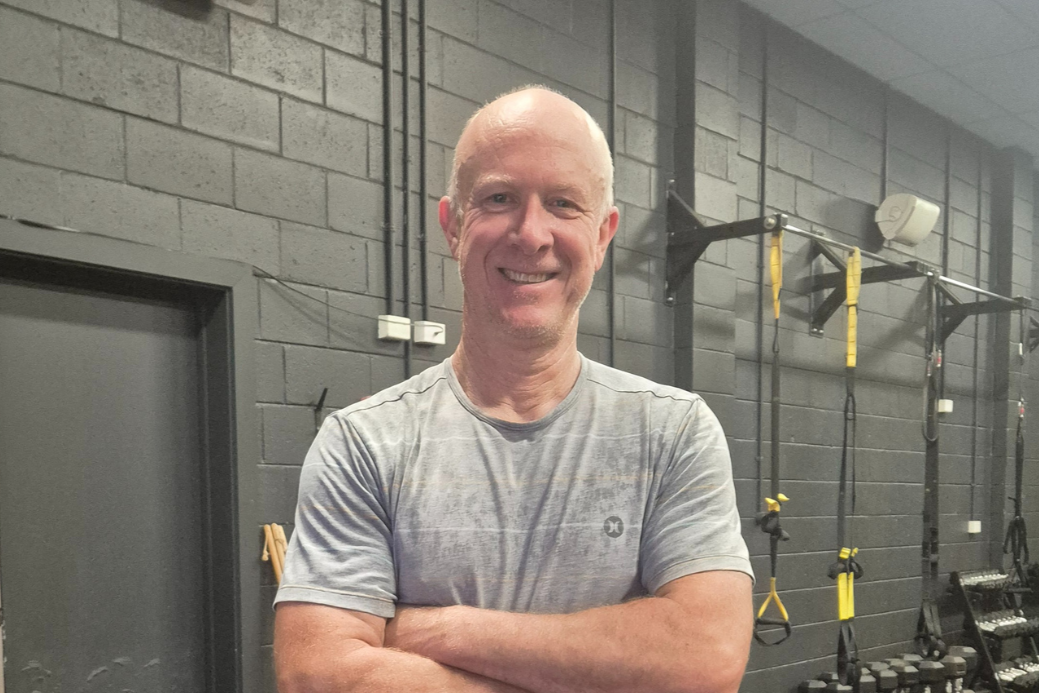
For most of his life, Darren did everything “right.”
He trained consistently, stayed active, and only had slightly elevated cholesterol—something his doctors monitored with medication but never flagged as a major concern.
Then one night, sitting on the couch watching TV, he felt what he describes as a “little ping” in the chest. Not pain. Not pressure. Just a strange, electric-shock flicker that made him pause for a moment.
He probably would’ve shrugged it off—like many of us do—if his partner Sue hadn’t stepped in.
“Right, that’s it. You’re going to the hospital,” she told him.
And like many of us would… he pushed back: “Ah, I don’t want to go to the hospital.”
Luckily, Sue insisted.
A Quiet Warning With Major Consequences
At the hospital, a series of scans and an angiogram revealed the real story: A 90% blockage in one of the three main coronary arteries.
“I thought, ‘oh shit,’” Darren says. A week later, at age 55, he was in surgery for a bypass. Surgeons used a vein from his arm to restore healthy blood flow.
No dramatic collapse. No textbook symptoms. Just a quiet, easy-to-ignore signal that could have turned into something far more serious.
A Ripple Effect That Saved Another Life
The shock of needing a bypass despite being fit and active pushed Darren into action—changing his diet, staying consistent with medication, and becoming more intentional with exercise.
But the biggest impact may be what happened next.
After his surgery, he urged his dad to get checked “just in case.”
Three months later, his 80-year-old father underwent a quadruple bypass.
“Normally it happens the other way around,” Darren says. “He was really lucky.”
The Lesson: Get Checked. Really.
There are simple tests—calcium scoring, CT scans, and routine heart checks—that can identify problems early. Darren brings this up with friends, co-workers, even casual acquaintances. Not to scare them, but to give them the chance he almost didn’t have.
“It’s amazing how many people have gone to get checked after hearing my story,” he says. “Some found issues early, and now they can monitor them.”
And his final piece of advice?
“Listen to your partner.”
Why We’re Fundraising This Month
Stories like Darren’s are exactly why we’re supporting the Heart Foundation this November through the Skip Your Way campaign. Heart disease is the leading cause of death in Australia—but early detection saves lives.
Sometimes it’s a big wake-up call.
Sometimes it’s a tiny ping in the chest.
Sometimes it’s a partner saying, “No, seriously, we’re going.”
Visit our fundraising page
A MONTH OF SKIPPING
In support of the Heart Foundation
SKIP YOUR WAY challenge
This November, Altona Bay Training is jumping into action for a cause close to our hearts — the Heart Foundation’s Skip Your Way Challenge!
We’ve set a big goal: to raise $5,000 and complete 25,000 skips each week across all our classes. Every skip, every swing of the rope, and every donation counts toward supporting life-saving heart health research and programs.
How You Can Get Involved
Join the Challenge:
Help us reach our weekly target of 25,000 skips across the gym! Every class will be part of the challenge — so grab a rope and get jumping.
Donate:
Contribute to our team fundraising page and help us reach our $5,000 goal for the Heart Foundation. Every dollar goes toward building healthier hearts for future generations.
Share the Love:
Spread the word! Share our fundraising page with friends, family, and your social circles. Let’s get the whole community behind this cause.
Pledge Your Skips at the ABT SKIP-A-THON:
Join us on Sunday, November 23 for our big finale — the ABT Skip-A-Thon!
We’re aiming to collectively skip for 790 minutes over 3 hours — one minute for every Australian who loses their life to heart disease every 10 days.
Event Details:
📅 Date: Sunday, November 23
🕒 Time: 1 PM – 4 PM
📍 Location: Altona Bay Training
👨👩👧 Family and friends are warmly invited!
Why We’re Skipping
This challenge is deeply personal to us. Many of our members and their families have been touched by heart disease — and this is our way of honouring them. We’re skipping in memory, in support, and in hope — for stronger hearts and longer lives.
Every skip honours someone we love.
Every dollar raised fuels the fight against heart disease.
Together, we’re skipping for life.
Join us. Donate. Share. Skip your way to a stronger heart.
Visit our fundraising page
FUELING YOUR SUCCESS
5 essential nutrition tips from Coach Natasha
5 essential nutrition tips from coach natasha
As your coach and qualified nutritionist, I see firsthand how powerful the right nutrition can be—not just for reaching your fitness goals, but for feeling strong and energetic every single day.
You train hard, you push your limits, and you show up for yourself. Now, let’s make sure your diet is working just as hard for you. Here are my top five, non-negotiable tips for optimizing your nutrition, performance, and recovery.
1. Food is Our Fuel (Don't Hit the Wall!)
This is the most common mistake I see: under-eating.
If you are consistently training but not providing your body with enough total energy, you are setting yourself up for a plateau. Your body can't recover, it can't build muscle, and your performance in the gym will suffer. Think of your food as the premium fuel your high-performance engine needs.
For the vast majority of the year, we should be aiming to eat our maintenance calories. Stop guessing! Use a reliable TDEE (Total Daily Energy Expenditure) calculator online to get an estimate of your maintenance calories, and use that as your foundation.
2. Protein is the Foundation of Every Meal
If you want to talk about recovery, repair, and building lean muscle tissue, you have to talk about protein. It is the absolute cornerstone of a high-performance diet.
Actionable Target: Aim for a daily intake of 1.6 – 2.2 grams of protein per kilogram of bodyweight.
Make it a non-negotiable to include a quality protein source at every single meal. This includes options like lean meat cuts, eggs, Greek yoghurt, tofu, lentils, or a scoop of protein powder. Hit your protein target, and the rest becomes so much easier.
3. Carbohydrates Before Training: Power Your Performance
While protein builds and repairs, carbohydrates are your body's primary and preferred energy source. They are what allow you to crush a heavy set of squats or sprint through your conditioning work.
Timing Matters: Approximately 45–30 minutes before your training session, focus on easily and quickly digesting carbs. We want these to hit your bloodstream fast to top off your energy stores.
Easy Pre-Workout Carbs: A piece of fruit (banana is great!), a muesli bar, crumpets, toast with jam or honey, or even a couple of lollies or sugar packets. Don't fear the quick sugar here—it is being immediately put to work!
4. Hydration Matters More Than You Think
You can't out-train poor hydration. Even a minimal drop—as little as 2% dehydration—can significantly affect your strength, focus, and overall athletic performance.
Your Daily Goal: Aim to drink 2.5 – 3 litres of water consistently throughout the entire day.
If you are a heavy sweater, or if you are training in the heat, consider adding electrolytes to your water. Electrolytes are essential minerals that help regulate nerve and muscle function, and replacing them is key to sustained performance.
5. Consistency Beats Perfection Every Time
It's tempting to search for the latest superfood or the 'perfect' macro split, but here is the truth: consistency and sustainability are the only things that truly move the needle.
No single mistake will derail your progress, just as no single ‘perfect’ day will make you an elite athlete. What matters is what you do daily.
Focus on the Core Habits:
Eating enough total calories (Tip 1).
Prioritising adequate protein (Tip 2).
Timing your training carbohydrates (Tip 3).
Drinking enough water (Tip 4).
Your nutrition doesn't need to be perfect; it needs to be something you can sustain for the long haul. Focus on these small, high-impact habits, and watch your performance soar.
Ready to apply these tips? If you have questions about structuring your meals or hitting your protein targets, just ask me next time you're in the gym! I also provide personalised services for an extra cost.
— Natasha, Coach & Qualified Nutritionist, Altona Bay Training
FAQS FOR NEWBIES
Answers to the questions you didn’t even know you had!
Walking into a new gym for the first time can feel intimidating — especially if you’ve never trained before or it’s been a while since your last workout. At Altona Bay Training (ABT), we make that first step easier by focusing on what really matters: community, support, and steady progress.
Here are some of the most common questions we get from new and returning members — along with real feedback from our amazing ABT community. 💬
FAQ: What if I’ve never trained in a gym — or it’s been a very long time? Will I fit in at ABT?
Yes — you absolutely will.
ABT is full of people who started exactly where you are now. Every session is coach-led and scaled to suit all experience levels — so you’ll never be left behind.
💬 “I was nervous to join a gym as I didn’t want to be judged for my low fitness level after not exercising for a long time. Everyone’s been so friendly and supportive.” – Sue
💬 “Hated the idea of joining a gym. Now I’m hooked and happy!” – AlEx
💬 “Friendly gym with a range of abilities and ages. Encouraging staff and well run.” – Jacqueline
Our coaches take the time to get to know you, explain each movement, and make sure you feel comfortable from day one. You’ll quickly realise ABT isn’t about competition — it’s about progress, at your own pace.
faq: What if I have an injury or issue with a particular movement or exercise?
That’s completely okay — and we’ll work with you.
Our coaches ask about injuries before every session and can modify any movement so you can train safely and confidently. The goal is to build strength and stability, not pain or risk.
💬 “I was anxious getting back into the gym, but after a month my lingering back issues have disappeared!” – Christine
💬 “At 47 I’m feeling stronger than I have in years — the coaches have really helped me improve my form and technique.” – Melinda
💬 “The coaches are helpful, caring, and professional — they understand each client’s ability and adjust accordingly.” – Angela
Whether you’re working around an old injury or just learning good movement habits, our team will make sure you feel confident and capable every step of the way.
FAQ: If I’m super NEW, how often should I train and what kind of training should I do?
If you’re just starting out, 3 sessions per week is a great place to begin.
This allows your body to adapt, recover, and build consistency.
At ABT, our classes are designed to help you move well and feel strong. As a general guide, we recommend:
2 Strength classes — These will build foundational strength through functional movements. Aim to attend 1 upper body and 1 lower body class each week.
1 Conditioning class — These improve stamina, energy, and overall fitness.
💬 “This has been an amazing space to get back into exercising. The team push me a little further every session but always understand my limits.” – Richard
💬 “The coaches are knowledgeable, encouraging, and truly invested in helping you reach your goals.” – Kara
Your coach will help you choose the right mix of classes to match your goals, schedule, and experience level.
faq: What’s the vibe like? Will there be people ‘like me’ there?
Definitely — and that’s one of the best parts about ABT.
Our community is made up of people of all ages, backgrounds, and experience levels. You’ll find busy parents, shift workers, first-timers, and long-time gym lovers all training side by side.
💬 “Awesome gym! Very friendly and knowledgeable instructors. Highly recommend 100%.” – Louise
💬 “Awesome community atmosphere — great early morning sessions and motivated, knowledgeable coaches.” – Bryce
💬 “This is an awesome new gym in Altona — great coaches, wonderful people, and a real mix of clients.” – Phil
💬 “I totally recommend Altona Bay Training. The management and members are awesome too.” – Fleur
Expect smiles, high-fives, and coaches who know your name. It’s a place where you can train hard and have fun doing it.
faq: What kind of improvements can I expect to see after training at ABT for a few months?
Most members start noticing changes within the first few weeks — not just physically, but mentally too.
You can expect:
Increased strength and confidence
Better movement and mobility
Improved posture and form
Higher energy levels and stamina
💬 “After two weeks I already felt stronger than I ever have — the trainers are next level.” – Jenny
💬 “I’ve been training for a month and it’s been a game-changer. My strength has improved and my back pain is gone.” – Christine
Progress looks different for everyone — but one thing’s guaranteed: you’ll feel better, stronger, and more capable than when you started.
Ready to Take That First Step?
You don’t need to “get fit” before you join — you just need to show up. We’ll handle the rest.
Come and experience what so many others already love about ABT: the coaching, the community, and the confidence that comes from training in a space that truly supports you.
NOT ALL GYMS ARE THE SAME
And how Altona Bay Training is different
When you shop around for a gym or fitness facility, you’ll see lots of different models. Some are “box gyms,” others are 24/7 commercial clubs, some only do personal training, and others focus heavily on group fitness like CrossFit, HIIT, or “boutique” style classes.
Each has its pros and cons — and there’s no one-size-fits-all. What matters is choosing the environment that supports your goals, your body, and your motivation.
How Altona Bay Training STANDS APART
1. Personalized group training (coaching + adaptation)
We believe in group training with individual attention. While many gyms push everyone through the same workout, we emphasise modifications, scaling, and coaching cues so that each person — beginner, returning athlete, someone with injuries — can work at the right level. Our coaches are trained to meet people where they are and help them make progress safely.
2. Community + accountability built in
One of the biggest complaints in big commercial gyms is feeling invisible or unaccountable. At ABT, you’re not just another face — we foster connection, mutual encouragement, accountability, and a sense of belonging. The relational side (coaches knowing your name, checking in on how you’re going) is baked into our experience. Our members often say the community is one of the things they value most.
3. Focus on sustainable strength, longevity & progression
Rather than chasing trends or fads, we build programs that balance strength, conditioning, mobility, and recovery — and we measure progress over time. We believe fitness should support you long term, not burn you out. Our “train smart, gain more” motto is exactly that: smarter programming that helps enduring gains.
Why This Difference Matters for You
Better adaptation to your body & needs — If you have past injuries, joint issues, or are coming back after a break, you’ll benefit from a program that knows how to adjust, not force you into a “one-size-fits-all” class.
Sustainable progress over years — Many gyms push extremes or short-term results. We aim for consistency, avoiding burnout, overuse, or injury.
Motivation + consistency via connection — When you feel part of a group, when coaches see your efforts and celebrate your wins, you’re more likely to stick with it through the hard parts.
WHAT GETS MEASURED GETS MANAGED
Why we think fitness testing is important, for everyone!
We’ve officially hit Week 10 of our 10-Week Training Strategy here at Altona Bay Training, and that means one thing: testing week.
Over the past nine weeks, our members have been putting in the work, following a structured program designed to build strength, fitness, and confidence step by step. This week, we get to measure the results — and the feedback so far has been overwhelmingly positive, not just from our members, but from our coaches too.
Testing is more than just numbers on a page. It’s about recognizing how far you’ve come, celebrating your wins, and setting yourself up for the next phase of training.
Here’s why we believe it’s so important to measure progress over time:
1. It Exposes Our Strengths
Testing shows us what we’re really capable of. It’s proof that the work we’ve been doing is paying off, and often it brings some big (and very welcome!) surprises. That feeling of realizing you’re stronger, fitter, or faster than you thought? Priceless.
2. It Builds Our Confidence
Confidence is key to continuing progress. By testing, we see the evidence of what our bodies can do, and that confidence carries us into the next 10 weeks. It helps us make smart choices around weights, reps, and volume — and it reminds us that we’re ready for more.
3. It Provides Evidence of Our Hard Work
Nine weeks of consistent effort add up. Testing is the moment we get to see it in black and white — the numbers, the reps, the times — and it feels good to know that it’s all been worth it.
As we wrap up this cycle and look ahead to the next 10 weeks, we couldn’t be prouder of our ABT community. The energy in the gym has been electric, the progress has been real, and the best part? We’re just getting started.
Here’s to more strength, more confidence, and more evidence of just how much we’re all capable of. 💪
Read more about the 10-Week Training Strategy.
GET READY FOR THE WESTSIDE CHALLENGE
A fitness challenge for everyone!
Calling all fitness fans, challenge-seekers, and everyone in between—your chance to test strength, endurance, and heart is coming soon! The Westside Challenge is set to push you, inspire you, and remind you just how far you can go when you commit.
What It Is
The Westside Challenge is an action-packed fitness race featuring multiple stations you’ll complete in sequence. Think sprints, strength, stamina, and full-body effort. Whether you want to go all out or take on a modified route, there’s a category for you.
Race Stations
You’ll take on 8 epic stations in the following order:
1 km Ski
Lunges over 100m with 8 kg or 12 kg med ball
100m Sled push
1 km Row
30 Burpees + 50m Broad Jumps
1 km Airbike
100 Ball Slams with 8 kg or 12 kg med ball
1 km Run (4 laps)
Categories & Who It’s For
We’ve got a couple of ways to take this on:
Competitive: For those who want to go “full throttle” — no modifications, all stations in full, and prizes for top finishers.
Open: For all levels — options to modify reps, split with a partner, or tackle a shorter distance. No prize money, just bragging rights and an epic sense of accomplishment.
Details
Where: Footscray Hockey Club, McIvor Reserve, Fogarty Ave, Yarraville VIC
When: Sunday 26 October, 9am
Cost: $39 (GST included)
Ticket Includes:
• Entry to the event
• Post-challenge fruit
• Westside Challenge bucket hat
• A cold beer or non-alcoholic drink
• Unlimited high-fives! 🙌
Want a T-shirt? They’ll be available via the booking link for $30.
Why You Should Join
Push your limits — test endurance, strength, and speed all in one event
Be part of a community that celebrates effort, determination, and fitness
Get fit in a fun, organized setting with like-minded people
Great photo ops, memories, and stories to tell
How to Sign Up
Spots are limited, especially in the competitive category, so don’t wait! Sign up now.
Grab your ticket, get your gear ready, and we’ll see you at the line. Let’s make the Westside Challenge one to remember!
5 QUICK TIPS FOR GETTING YOURSELF TO THE GYM
Hint: not one of those tips is ‘find motivation’.
We are soooo good at getting in our own way.
There’s this magical, completely unfounded belief that the only time we can go to the gym is when we feel motivated. We throw our hands up and blame lost mojo for the reason we can’t possibly exercise. We externalise this and treat it like it’s something outside ourselves and out of our control.
And when we don’t have motivation, it is so easy to let that get in the way of just getting the work done. That’s usually when the excuses start. It’s too cold, it’s too hot, I’m too tired, I’m too busy, I’m too this, I’m too that. The list goes on and on. The conditions have to be just perfect.
And I totally get it - who wants to subject themselves to 45 minutes of short term discomfort for not only the short term benefit of feeling great when you leave but also the long term benefits of improved strength, fitness, health, wellbeing, longevity and overall physical and mental function? #sarcasm
But if we wait for when the ‘time is right’ or when we ‘feel like it’, life will pass us by. And the opportunities to make our lives better will slip through our fingers.
These 5 quick tips for getting to the gym will help us ignore that pesky lack of motivation and set us on the path to success.
#1 - SET UP THE environment
If you want to become ‘that person who just goes to the gym no matter what’, you have to set up an environment that makes it super easy.
Here’s a pop quiz to demonstrate exactly what that looks like!
Pick the scenario that creates the optimal environment for consistently attending your gym classes:
Scenario #1 - It’s 8pm the night before class, and you’re getting ready for the next morning. The class was booked a week ago along with all classes that week. You’ve got your leggings, undies, singlet, bra, socks, shoes, water bottle, towel, jacket and car keys in a pile outside the bedroom door. The next morning’s alarm sounds at 5.35am, 5.40am, then 5.45am (just in case). You’re up and getting dressed while you make a coffee, brush your teeth, and fix your hair. At 6am you’re out the door for the 6.15am class.
Scenario #2 - It’s 5.52am and you wake up. You lie in bed thinking about how much effort it’s going to take to get up, find clothes in the dark while your partner sleeps and get dressed. And you definitely don’t have time to do all of those things and still make it on time to class. You haven’t even booked the class and you’re not sure, but you think it’s probably too late to book anyway, so what’s the point. You’ll try again tomorrow.
#2 - track the habit
Coming to the gym regularly is a habit that requires building. And one way to build that habit is to track it by keeping a running tally of the classes you attend. If your membership includes attending a certain number of classes per week, create a visual way to track those classes you attend. Put it in a high traffic area of your house (eg the fridge) and following each session, tally it on the tracker. You can use this for any habit you want to build - drinking more water throughout the day, getting your steps in, etc.
#3 - BOOK IN ADVANCE
And treat it like a doctor’s appointment.
We highly recommend sitting down on a Sunday as you reset for the week ahead and booking your upcoming classes all at once. This will help to prevent last minute strikes of CBF. It may still happen but if you’ve booked and committed to treating your classes like doctor’s appointments, you are more likely to make it work.
And if you must cancel, no sweat! Just make a time right then and there to re-book for another class.
#4 - find an accountability partner
Aka Train with a Friend!
If you want to make it easier to get to the gym, find someone to train with who can hold you accountable. Take turns giving each other a ride, check in to confirm your week’s sessions, celebrate each other’s small wins. When you aren’t in it alone, it becomes much easier to grease the wheels of attendance.
#5 - act first and the motivation will follow
Let’s accept that the little voice telling us we have no motivation is actually an internal part of ourselves. It’s not some outside force inflicting itself on you. It’s a little voice that we have the power to control. We can ignore it, turn down its volume or hear it and respond with ‘so what?’. You can even trick it into behaving - motivation is actually caused by taking action, not the other way around. Somewhere along the way the order of these things got swapped in our minds. Motivation happens after we start doing something that we brings us benefit or pleasure.
So when the mojo is low, focus on how you felt when you regularly did something that positively impacted you. It made you want to keep doing it! So reverse the order of what your mind is telling you to do. First we act - consistently and repeatedly - and the motivation will follow.
YOUR FIRST CLASS AT ABT: WHAT TO EXPECT
Here’s a quick run-down of what to expect from your first class with us!
Walking into a new gym can feel exciting, nerve-wracking, and maybe even a little intimidating. At Altona Bay Training, our goal is simple: we want you to feel welcomed, supported, and energised the moment you step through the door. Here’s exactly what your first day will look like, so you can relax and enjoy the experience.
Arriving at the gym
We recommend arriving about 10 minutes early for your first class. This gives you time to find a park, settle in, and have a quick chat with your coach. They’ll introduce themselves, ask about any injuries or concerns, and—if it’s your first visit—show you around the space so you feel comfortable.
Bring along:
A towel
A water bottle
Comfy, breathable gear you can move and sweat in
You can store your keys and phone in the pigeonholes at the front before class kicks off.
During the class
Our group training sessions run for 45 minutes and are designed to be challenging, supportive, and fun. Every class is coach-led from start to finish, so you’ll never be left wondering what to do.
Here’s the flow:
Warm-up – a few minutes to get your body moving and ready.
Resistance training block – strength-focused exercises to build muscle and confidence.
Conditioning block – a short, sharp burst to get the heart rate up.
Cool-down & stretch – easing the body down and supporting recovery.
What makes ABT different is our coaching approach. Your coach is there to guide you, make adjustments, and tailor the workout to your fitness level. On Day 1, the focus isn’t on lifting heavy or “keeping up” with anyone else—it’s about learning the movements, feeling comfortable, and having fun. If you’re unsure about something, just ask—we love questions.
After class
Your coach will check in with you, answer any questions, and make sure you’re feeling good before you head off. You’re welcome to use our amenities (yes, we’ve got showers!) or head straight into the rest of your day.
A little muscle soreness is completely normal after your first session—it’s your body adjusting to new movements. You can help ease this with:
Plenty of water
Nutritious food
Light movement (walking, yoga, stretching)
We’ll also follow up with you after your first class to see how you’re feeling and help you stay on track with your training.
FINDING FITNESS THROUGH GRIEF
How Coach Chelsea discovered her passion for exercise and group fitness.
I have so many reasons why I am passionate about training and group fitness and how that passion turned into gym ownership.
Here is one of those reasons.
In 2016 I had a new baby and a sick father. I was in my mid-30s, with a busy career and two young children. After having my youngest, I felt this unexplanable drive to move my body, to feel stronger and more connected to my body. Maybe deep down my body knew I needed to better manage the stress of my chaotic life. Maybe I felt like I needed to set a better example for my girls. Maybe I just needed 45 minutes that were mine and mine alone. Maybe it was seeing my dad, sinking deeper and deeper into his illness. It was probably all of those things.
Whatever it was, it compelled me to pull out the flyer for HIIT YOU FIT that landed in my letterbox. I contacted the owner, Karen, and started classes. She coached classes in the guide hall around the corner from my house, and at first I could only handle one class a week. Then I bumped it up to two. I was slowly improving and beginning to lay the foundation for my health and fitness. Fun fact: Karen now coaches for us at ABT. I absolutely could not pass up the opportunity to bring her on board. If you know, you know.
I spent 2016 getting fitter and stronger and the irony was not lost of me that my dad was 10,000 miles away growing sicker and sicker. When he passed away in February 2017 at only 61 years old, my life changed forever.
Among the many ways his death impacted me, one that I was not expecting was my turbo-charged determination to prioritise my health. I became laser-focused on doing whatever it took to secure my own healthy future. A part of my brain snapped, and I locked in on building the best quality of life I could.
My training became the foundation for everything that followed - my unwavering commitment to training, my curiosity to move my body in fun and interesting ways (obstacle racing! bouldering! pole dancing!) and my eventual pursuit of a group fitness certification.
An even more unexpected side effect of his death was how much exercise helped me through the grief process. Training helped me through one of the darkest periods in my life in ways I never thought possible.
In those dark, early days after dad died, I used training as a balm to soothe the ache of the loss. I left every class feeling better and less depressed than I did when I went in - thanks endorphins! And training made me feeling I had control of something in a period when it felt like the ground had been ripped out from beneath me.
Dad had been an athlete in his younger years - a competitive junior surfer and then in his teens, his efforts at 10m platform diving secured him a college scholarship. And all those years later, I felt like training like an athlete brought me closer to him. The comfort it gave me was a welcome surprise.
I am so grateful to have exercise, and group fitness in particular, as something I can lean on to help me manage my grief. It’s also way to channel that sadness in a positive way, to put my energy into something that would benefit me not only immediately but also for years and years to come. I have learned firsthand how it can change us in ways we least expect it. When the opportunity presented itself to open a gym and provide the same welcoming, safe space I had when I needed it most, I didn’t hesitate.
I want our members to leave feeling better than when they came in - in whatever way they need it most. Whether it’s helping them manage their lives outside the gym, improve their mental state, or increase their health outcomes. We are here to help, and what a privilege it is to provide this service to our community.